
Introduction
Securing a loan with favorable interest rates can save you thousands of dollars over the life of your loan. Whether you're looking for a mortgage, auto loan, or personal loan, the strategies to get the best rates are similar. This guide will walk you through everything you need to know to secure the most competitive loan rates in 2025.
Why Loan Rates Matter
Even a small difference in interest rates can have a significant impact on your total repayment amount. For example, on a $300,000 30-year mortgage:
- At 4.5% interest: Monthly payment of $1,520, total interest paid $247,220
- At 4.0% interest: Monthly payment of $1,432, total interest paid $215,609
That's a savings of over $31,000 just by reducing your rate by 0.5%!
For auto loans and personal loans, the impact is similarly substantial:
- On a $30,000 5-year auto loan, a 1% rate reduction can save you approximately $800 in interest
- On a $10,000 3-year personal loan, a 2% rate reduction can save you about $300 in interest
These savings can be redirected to other financial goals like retirement savings, education funds, or home improvements.
Factors That Affect Your Loan Rate
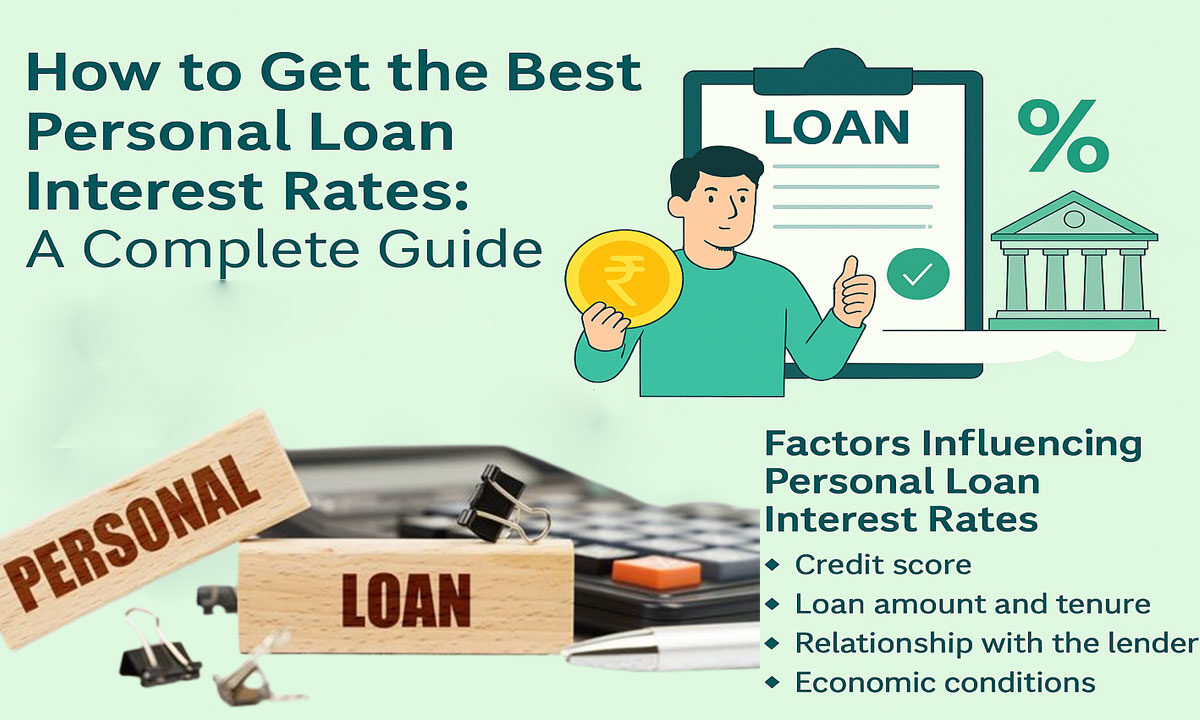
1. Credit Score
Your credit score is the most important factor lenders consider when determining your interest rate. Generally, scores are categorized as:
- Excellent: 750+
- Good: 700-749
- Fair: 650-699
- Poor: 600-649
- Bad: Below 600
Tip: Use our Loan Calculator to see how different interest rates affect your monthly payments and total interest paid.
The difference in rates between credit score categories can be substantial. For example, someone with an excellent credit score might qualify for a mortgage rate of 3.5%, while someone with a fair score might be offered 4.5% or higher.
2. Debt-to-Income Ratio
Lenders typically prefer a DTI ratio below 36%, with no more than 28% going toward housing costs. Your debt-to-income ratio is calculated by dividing your total monthly debt payments by your gross monthly income.
For example, if your monthly income is $5,000 and your total debt payments (including the new loan) would be $1,800, your DTI would be 36%.
Lenders view a lower DTI favorably because it indicates you have sufficient income to meet your debt obligations. To improve your DTI:
- Pay down existing debts
- Increase your income
- Avoid taking on new debt before applying for a loan
3. Loan Term
Shorter loan terms usually come with lower interest rates but higher monthly payments. This is because the lender's money is at risk for a shorter period.
For example, a 15-year mortgage typically has a rate about 0.5% to 0.75% lower than a 30-year mortgage. While the monthly payment will be higher, the total interest paid over the life of the loan will be significantly less.
Consider these factors when choosing a loan term:
- Your monthly budget constraints
- Your long-term financial goals
- How long you plan to keep the loan
4. Loan Type
Different loan types (fixed-rate, adjustable-rate, etc.) come with different rate structures.
Fixed-rate loans maintain the same interest rate throughout the loan term, providing predictability in your monthly payments. These are ideal if you plan to keep the loan for a long time or if interest rates are currently low.
Adjustable-rate loans (ARMs) typically start with a lower rate for an initial period (e.g., 5, 7, or 10 years), after which the rate adjusts periodically based on market conditions. These can be beneficial if you plan to sell or refinance before the initial period ends.
Government-backed loans like FHA, VA, or USDA loans often offer competitive rates, especially for borrowers with lower credit scores or smaller down payments.
5. Economic Factors
The overall economy, Federal Reserve policies, and inflation all impact loan rates. While you can't control these factors, understanding them can help you time your loan application:
- When the Federal Reserve raises its benchmark rate, consumer loan rates typically follow
- During periods of high inflation, interest rates tend to rise
- In a strong economy with low unemployment, rates may increase
- During economic downturns, rates may decrease to stimulate borrowing
How to Improve Your Chances of Getting the Best Rates
1. Improve Your Credit Score
- Pay all bills on time: Payment history accounts for 35% of your FICO score
- Reduce credit card balances: Aim to use less than 30% of your available credit
- Don't close old credit accounts: Length of credit history matters
- Limit new credit applications: Each application can temporarily lower your score
- Check your credit report for errors: Dispute any inaccuracies with the credit bureaus
It typically takes 3-6 months of consistent positive behavior to see meaningful improvements in your credit score. Plan accordingly if you're preparing to apply for a major loan.
2. Save for a Larger Down Payment
A larger down payment reduces the lender's risk and can help you secure a better rate. For mortgages, a down payment of 20% or more helps you avoid private mortgage insurance (PMI), which can add 0.5% to 1% to your loan costs.
For auto loans, a down payment of 20% or more can often qualify you for the best rates. For personal loans, some lenders offer rate discounts for larger loan amounts with strong credit profiles.
Strategies to save for a larger down payment include:
- Setting up automatic transfers to a dedicated savings account
- Temporarily reducing discretionary spending
- Using windfalls like tax refunds or bonuses
- Exploring down payment assistance programs (for mortgages)
3. Compare Multiple Lenders
Don't accept the first offer you receive. Shop around and compare rates from:
- Traditional banks
- Credit unions
- Online lenders
- Mortgage brokers
When comparing offers, look beyond the interest rate to consider:
- Origination fees and closing costs
- Prepayment penalties
- Rate lock periods
- Customer service reputation
- Special programs or discounts
Many lenders offer pre-qualification with a soft credit pull, allowing you to compare potential rates without affecting your credit score.
4. Consider Loan Points
Paying points upfront can lower your interest rate over the life of the loan. One point typically costs 1% of the loan amount and reduces the interest rate by about 0.25%.
For example, on a $300,000 mortgage, paying $3,000 (1 point) might reduce your rate from 4% to 3.75%. This could save you approximately $15,000 over 30 years.
The break-even point is crucial when deciding whether to pay points:
- Calculate how much you'll save monthly with the lower rate
- Divide the cost of the points by the monthly savings
- The result is how many months it will take to recoup the cost
If you plan to keep the loan longer than the break-even point, paying points may be worthwhile.
5. Negotiate
Don't be afraid to negotiate with lenders, especially if you have competing offers. Lenders have some flexibility in their rates and terms, particularly for well-qualified borrowers.
Effective negotiation strategies include:
- Getting offers in writing from multiple lenders
- Asking lenders to match or beat competitors' offers
- Highlighting your positive financial attributes
- Being prepared to walk away if terms aren't favorable
Remember that even a 0.125% reduction in your rate can lead to significant savings over the life of a loan.
6. Consider Relationship Discounts
Many financial institutions offer rate discounts for existing customers. For example:
- Setting up automatic payments from a checking account (typically 0.25% discount)
- Maintaining a minimum balance in linked accounts
- Having multiple products with the same institution (mortgage, checking, investments)
These discounts may seem small, but they can add up to substantial savings over time.
Using Our Loan Comparison Tool
Before finalizing any loan, use our Loan Calculator to compare different scenarios. The comparison feature allows you to see side-by-side how different interest rates and terms affect your payments.
Our calculator can help you:
- Compare monthly payments across different loan options
- See the total interest paid over the life of each loan
- Visualize the amortization schedule
- Determine how extra payments can reduce your loan term and interest costs
- Calculate the break-even point for refinancing or paying points
This information empowers you to make an informed decision based on your financial situation and goals.
Special Considerations for Different Loan Types
Mortgage Loans
- Timing matters: Rates can vary daily, so lock your rate when it's favorable
- Consider the APR: This reflects the true cost of the loan including fees
- Explore first-time homebuyer programs: These often offer competitive rates
- Look into rate lock extensions: These can protect you if closing is delayed
Auto Loans
- Dealership financing isn't always best: Get pre-approved before shopping
- New cars typically have lower rates than used vehicles
- Shorter terms (36-48 months) usually offer the best rates
- Manufacturer incentives may include 0% financing for qualified buyers
Personal Loans
- Secured loans (backed by collateral) offer lower rates than unsecured loans
- Loan purpose matters: Some lenders offer better rates for debt consolidation
- Smaller loan amounts often come with higher rates
- Co-signers can help you qualify for better rates if your credit is limited
Conclusion
Securing the best loan rates requires preparation, research, and sometimes patience. By improving your credit score, shopping around, and understanding how different factors affect your rate, you can save thousands of dollars over the life of your loan.
Remember that the lowest rate isn't always the best deal—be sure to consider fees, closing costs, and other terms when making your final decision.
With the strategies outlined in this guide and our helpful Loan Calculator, you're well-equipped to navigate the lending landscape and secure the most favorable loan terms possible in 2025.
FAQs About Loan Rates
How often do loan rates change?
Loan rates can change daily based on market conditions and economic factors. Mortgage rates in particular can fluctuate throughout the day.
Is it worth refinancing for a 0.5% lower rate?
It depends on your loan amount and how long you plan to keep the loan. Use our calculator to see if the savings outweigh the refinancing costs. Generally, a 0.5% reduction can be worthwhile for larger loans with many years remaining.
Do credit inquiries hurt my chances of getting a good rate?
Multiple inquiries for the same type of loan within a short period (usually 14-45 days) typically count as a single inquiry for credit scoring purposes. This "rate shopping" period allows you to compare offers without significantly impacting your credit score.
Can I get pre-approved without affecting my credit score?
Many lenders offer pre-qualification with a soft credit pull, which doesn't affect your score. A formal pre-approval usually requires a hard credit pull, which may temporarily lower your score by a few points.
How do I know if I'm getting a good rate?
Research current average rates for your loan type and credit profile, then compare offers from multiple lenders. Financial news websites and government resources like the Federal Reserve publish average rate information regularly.
Should I choose a fixed or adjustable rate?
If you plan to keep the loan for many years and current rates are low, a fixed rate provides stability. If you plan to pay off or refinance the loan within a few years, an adjustable rate might offer initial savings.
How much can my credit score improve my rate?
Moving from a "good" to an "excellent" credit score can reduce your interest rate by 0.5% or more, potentially saving thousands over the life of a loan.